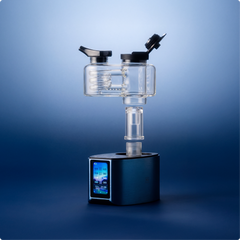
Best E-Rig for Rosin: What Actually Matters

Rosin is the hardest material to do justice to in an e-rig, and most devices weren't designed with it in mind. It's terpene-dense, heat-sensitive, and often wetter than the shatter and badder that e-rigs were originally built around — which means the things that make a rig good for rosin aren't always the things listed first on a spec sheet.
Here's what actually matters, and why.
Why Rosin Is Different
Rosin is solventless. It's pressed out of flower or hash using heat and pressure rather than extracted with a solvent, which means the terpene profile that survives into the final product is closer to the source material. Live rosin, pressed from fresh-frozen material, carries even more of it.
That has three practical consequences for hardware:
- It's heat-sensitive. The aromatic compounds that make rosin worth paying for are the first thing you lose to excessive heat. Overshoot and you've converted an expensive, nuanced material into generic vapor.
- It's often wet. Terpene-rich rosin tends toward a looser, saucier consistency than shatter or distillate. Wet material bubbles and can splash up into the airpath, which wastes it and makes cleaning worse.
- It leaves more behind. More residue per session means chamber material and cleaning access matter more than they would with a drier concentrate.
What to Look For
1. Precision at the low end — not just presets
Rosin's flavor window is narrow and it sits low. A device with four or five fixed presets may not have a setting where you actually want to be. What you want is a continuous range you can dial in, so you can find the temperature that works for a specific batch rather than accepting the nearest preset.
2. A non-porous chamber
This matters more with rosin than with anything else. Porous chamber materials like ceramic retain residue at a microscopic level and develop a background flavor signature over time. With a flat-tasting distillate you might not notice. With a terpene-forward live rosin — the entire reason you bought it — that background note is sitting directly on top of the thing you're trying to taste. Non-porous quartz doesn't accumulate it.
3. Chamber depth and splash management
Wet rosin bubbles. A shallow chamber sends material up into the airpath, where it's both wasted and annoying to clean out. Depth and a well-designed carb cap do more for rosin than raw wattage.
4. Cold start capability
Cold start — loading the chamber before heating rather than after — is the single most useful technique for rosin, and not every device handles it well. More on this below.
5. Cleaning access and replaceable parts
Rosin leaves more residue, so you'll clean more often. A chamber you can reach easily, and heating components you can replace individually rather than replacing the whole device, both matter over a year of use.
Temperature: Where Rosin Actually Lives
Lower than most people start. The useful range for rosin generally sits well below where cloud-chasing temperatures begin.
The bands above are the EQ's Smart Paths, but the principle applies to any device: with rosin, work upward from the bottom of the range rather than starting in the middle. The gaps between those bands are settable on a continuous-range device, which is where you'll often land once you've dialed in a particular batch.
Cold Start vs. Hot Start
Cold start means loading the chamber before you turn the heater on, so the material comes up to temperature gradually. Hot start means bringing the chamber to temperature first, then loading. For rosin, cold start is usually the better choice — as temperature rises, different compounds volatilize at different points rather than all at once, which is where the layered flavor comes from.
Two practical notes on cold start with rosin: don't overload the chamber, and use the carb cap. Overloading is the most common cause of splashback with wet material, and the carb cap gives you control over airflow as the chamber comes up to temperature.
Where the EQ Fits
The EQ Electric Quartz: Jacuzzi Collection was designed around the problem rosin presents. The vapor path is quartz throughout — non-porous, so it doesn't accumulate the flavor memory that competes with a terpene-forward material. Temperature is a continuous 450–650°F range rather than a set of presets, with four Smart Paths you can retune, so you can actually find a specific batch's window instead of settling for the nearest fixed setting. It supports cold start directly, includes a zirconia carb cap for airflow control, and the quartz crucible and heater are both individually replaceable.
One technique note if you're coming from a ceramic rig: quartz rewards a larger load and a slower, steadier pull. That's a habit carryover, not device complexity — and with rosin specifically, the slower draw is what lets the staged terpene expression actually reach you.
Related Reading
- Best E-Rig for Flavor: Why Quartz Beats Ceramic
- DaVinci EQ Temperature Guide: Best Settings by Concentrate
- Common Terpenes and Their Boiling Points
- Best E-Rig by Budget 2026
- How to Clean an E-Rig (and Prevent Chazzing)
FAQ
What temperature should I use for live rosin?
Start low — in the 480–500°F band — and work up. Live rosin carries more volatile aromatic content than cured rosin, and it's the easiest material to overshoot. Most people settle somewhere between 500°F and 540°F once they've dialed in a particular batch.
Does rosin need a quartz chamber specifically?
It doesn't require one, but it's where the difference is most audible. Rosin's whole value proposition is its terpene profile, so any background flavor from a porous chamber sits directly on top of what you're paying for.
Why does my rosin bubble and splash?
Usually too much material, too much heat, or both. Terpene-rich rosin runs wetter than shatter or distillate. Use a smaller load, start lower, and keep the carb cap on as the chamber heats.
Is cold start always better for rosin?
For flavor, generally yes. For maximum vapor output, hot start wins. Most rosin users cold start by default and switch to hot start when they want a denser hit.
Does rosin dirty a chamber faster?
Yes — it leaves more residue than drier concentrates. Wipe the chamber while warm after every session; it's the difference between a 30-second habit and a scraping job later.