How to Get the Best Hits from the DaVinci EQ

The EQ is simple to use. The sip is what changes.
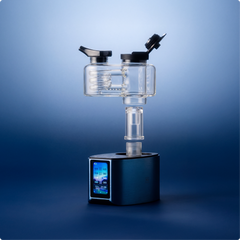
The DaVinci EQ has one button-free touchscreen, one carb cap, and one crucible. You set your temperature, you load your concentrate, you sip. That’s it.
What trips people up isn’t the device — it’s that ceramic rigs trained them to draw hard and fast, and the EQ doesn’t reward that. Quartz bottom-heat is different physics from ceramic side-wall heating, and it’s better physics for flavor. It just asks for one thing in return: a slow, deliberate sip instead of a rip.
Make that adjustment and the EQ opens up immediately. Here’s everything you need to know to get there in your first session.
Why quartz bottom-heat changes the draw
Most popular e-rigs use ceramic chambers that heat concentrate from the walls simultaneously. This approach generates vapor volume quickly and is forgiving of aggressive draws — the chamber is producing vapor faster than most people can pull it, so technique barely matters.
The EQ’s quartz crucible heats from the bottom up. Vapor forms as your concentrate melts and rises through a quartz-and-glass path that adds zero character of its own — you taste the terpenes, not the hardware. But quartz bottom-heat builds vapor progressively, which means a slow, consistent sip extracts far more than a hard pull.
The EQ isn’t asking you to work harder. It’s asking you to sip instead of rip.
The full session technique, step by step
Step 1: Load correctly
The quartz crucible has a wider surface area than a ceramic bowl. A rice-grain dab — the standard advice for most ceramic rigs — will underperform in the EQ. Start with a small-pea-sized load for everyday sessions. Experienced dabbers should go bigger. Use the DaVinci Hot Knife to load cleanly.
Step 2: Set your temperature on the touchscreen
Dial in the exact temperature for your concentrate type — no presets, no app, no phone. Starting points: live rosin 495–520°F, live resin 510–540°F, wax/budder 530–560°F, shatter 555–580°F, crumble 520–555°F. Add 30–40°F to your usual ceramic rig setting as a starting point.
Step 3: Seat the carb cap firmly before drawing
The zirconia carb cap is part of the system, not an optional accessory. It creates the low-pressure environment inside the crucible that allows quartz bottom-heat to vaporize your concentrate completely. Seat it firmly every time.
Cold-start technique: for maximum flavor extraction
Load into a room-temperature crucible, seat the cap, power on, and begin your slow sip as the temperature climbs. Cold-start captures the lightest, most volatile terpenes before your target temperature is reached. Many serious live rosin users prefer this exclusively.
One session is all it takes
The EQ is straightforward to operate. What changes from your previous e-rig isn’t how you operate the device — it’s how you draw from it. Slow the sip. Load generously. Seat the cap. The EQ is a terpene flavor monster the moment you give it what it asks for.
Ready to experience it? Shop the DaVinci EQ Electric Quartz Rig.